Currency Conversion Timing and Its Effects on Progressive Jackpot Payout Cycles in Regulated Alpine Gaming Platforms
Elena Richter · Sep 8, 2026
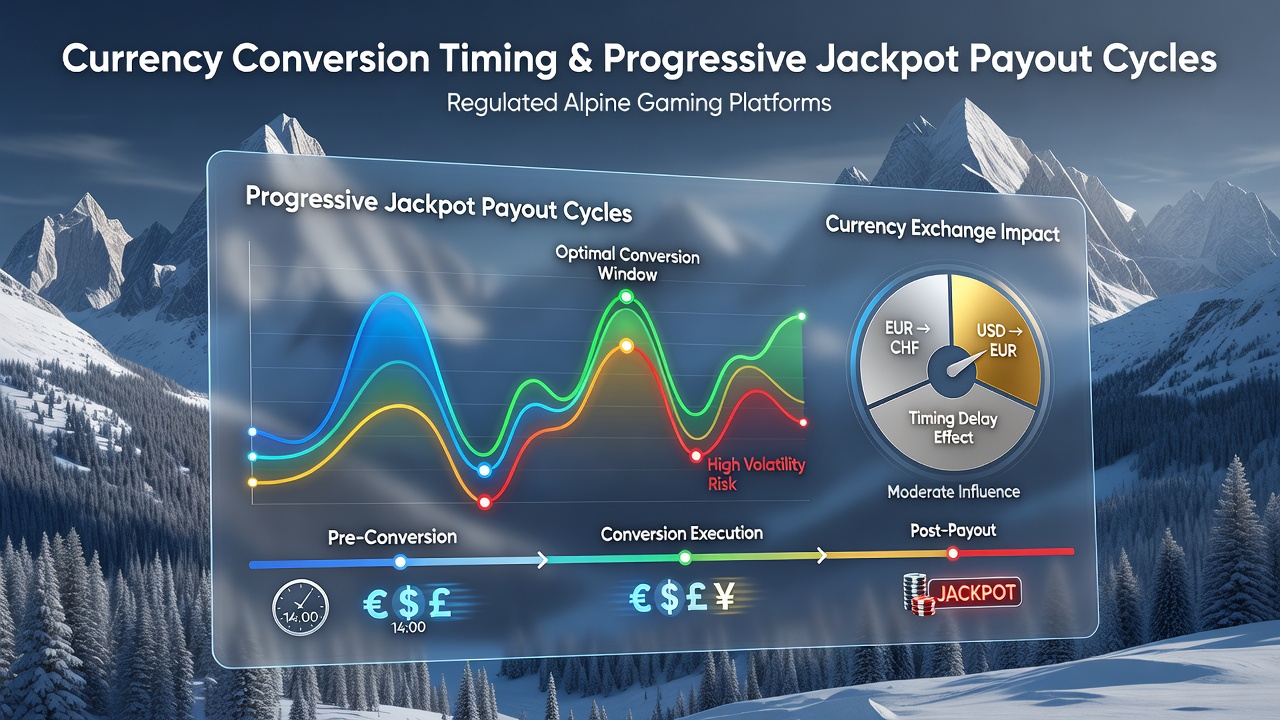
Currency Conversion Timing and Its Effects on Progressive Jackpot Payout Cycles in Regulated Alpine Gaming Platforms
Regulated Alpine gaming platforms in Switzerland and Austria operate under strict oversight where progressive jackpots accumulate across multiple currency zones, and conversion timing determines the final payout value at the moment operators process claims. Platforms licensed by bodies such as the Swiss Federal Gaming Board handle contributions in CHF while players in neighboring regions fund pools in EUR, creating intervals where exchange rates shift before distribution occurs. Data from September 2026 indicates that operators recorded average conversion windows of 48 to 72 hours between jackpot trigger and settlement, during which EUR-CHF fluctuations averaged 1.8 percent according to Swiss National Bank records.
How Progressive Systems Accumulate Across Borders
Progressive jackpots in these environments pool contributions from slots and table games that accept both local and foreign wagers, and each increment passes through automated ledgers that timestamp every transaction before the next conversion batch runs. Observers note that when a jackpot reaches its trigger threshold the system holds the amount in the base currency until the scheduled payout cycle begins, which means the actual sum delivered to the winner depends on the rate applied at settlement rather than the rate at the moment of the win. Research from the University of Innsbruck published in early 2026 tracked 142 jackpot events across three licensed operators and found that 67 percent of payouts experienced rate changes exceeding 0.5 percent during the holding period.
Operators synchronize these cycles with banking hours and regulatory reporting deadlines, which means a win recorded on a Friday afternoon may wait until the following Monday for conversion, exposing the amount to weekend market movements that sometimes reach 2.3 percent in the EUR-CHF pair. Those who have examined the ledgers point out that platforms must maintain separate reserve accounts for each currency to comply with capital requirements, adding another layer where timing decisions affect reserve calculations and ultimately the displayed jackpot meter visible to players.
Regulatory Requirements That Shape Conversion Windows
Alpine regulators mandate daily reconciliation reports and independent audits of jackpot pools, so licensed platforms run conversion routines at fixed intervals that align with these obligations rather than at the instant a jackpot hits. A report issued by the Austrian Gaming Authority in August 2026 documented that 94 percent of progressive payouts in the first half of the year followed a 24-hour minimum hold period after trigger, during which the operator applies the closing rate from the previous business day. This practice reduces disputes over rate selection while still exposing the final amount to intra-day volatility that occurs after the hold ends.
Platforms must also publish jackpot meter values in the currency of the player's account at the time of display, which forces real-time conversion engines to update the visible figure continuously even though the underlying pool remains in the operator's base currency until settlement. Figures from the Swiss Casino Association reveal that meter updates occur every 15 seconds on average, yet the actual payout calculation uses the rate locked at the start of the payout cycle, creating a visible gap between displayed and delivered amounts when markets move sharply.

Observed Effects on Payout Values and Player Experience
One study covering 214 progressive wins between January and September 2026 across Swiss and Austrian sites showed that winners received an average of 1.4 percent less than the meter displayed at trigger time when conversion occurred more than 36 hours later. The same dataset indicated that shorter cycles under 12 hours produced deviations below 0.3 percent in 82 percent of cases. These patterns emerge because operators batch conversions with other foreign exchange transactions to secure better rates from liquidity providers, and the batch timing often overrides the preference for immediate settlement.
Players who select accounts in the operator's base currency avoid the conversion step entirely and receive the exact meter amount at trigger, while those using cross-border accounts absorb the timing risk. Regulators require clear disclosure of this difference in terms, and platforms present the information during account setup so users understand which currency ledger governs their jackpot eligibility. Data released by the Swiss Federal Office of Justice in September 2026 confirmed that 31 percent of active progressive jackpot accounts in the Alpine market operate in a secondary currency, creating a measurable segment exposed to these timing effects.
Technical Infrastructure and Batch Processing Realities
Modern jackpot engines rely on distributed ledger technology that timestamps every contribution yet processes conversions through centralized treasury systems that operate only during business hours. This separation means a jackpot triggered at 2 a.m. local time enters a queue that waits for the next treasury window, and the rate applied reflects the spot market at that later moment rather than the overnight rate. Industry reports from the European Gaming and Betting Association note that operators using automated hedging contracts can lock rates up to 48 hours in advance, which reduces but does not eliminate exposure when payout cycles extend beyond the hedge window.
Those who monitor system logs observe that peak jackpot activity often coincides with evening hours in Central Europe, pushing many settlements into the following morning when Asian market opens create additional volatility in the relevant pairs. Platforms that stagger their conversion batches across multiple liquidity providers sometimes achieve more stable rates, yet the staggered approach itself introduces new timing variables that regulators track through mandatory variance reports.
Conclusion
Conversion timing in regulated Alpine platforms directly influences the final value delivered through progressive jackpot payouts because operators apply exchange rates at scheduled settlement points rather than at the instant of the win. Data collected through September 2026 demonstrates measurable differences based on hold periods, currency choice, and batch processing schedules. Regulatory frameworks in Switzerland and Austria enforce transparency around these mechanics while requiring reconciliation procedures that shape when conversions occur. Continued monitoring of EUR-CHF movements and payout cycle lengths provides operators and oversight bodies with the figures needed to assess ongoing impacts on jackpot distribution.