Peak Hour Dynamics in Mobile Live Casino Environments Under Alpine Regulations
Eden Hayes · Nov 3, 2026
Peak Hour Dynamics in Mobile Live Casino Environments Under Alpine Regulations
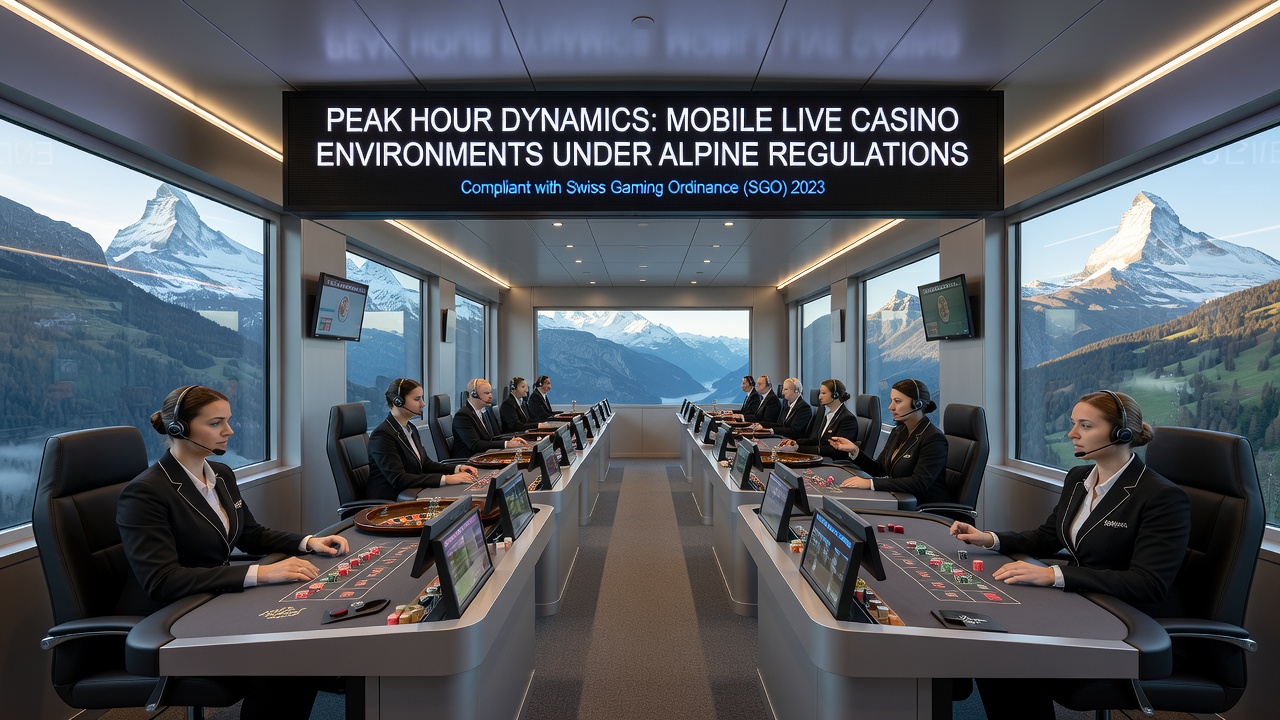
Peak hour dynamics in mobile live casino environments under Alpine regulations center on concentrated activity periods that occur between 6 PM and midnight CET on weekdays along with extended windows on weekends and during public holidays. These intervals drive increased mobile session initiations across Swiss-licensed platforms where operators must balance server capacity with mandatory compliance checks such as identity verification and session time limits enforced by the Swiss Federal Gaming Board.
Research from the University of St. Gallen indicates that mobile traffic spikes by 40 percent during these windows compared with off-peak hours while live dealer tables experience queue formation that extends average wait times to 90 seconds. Platforms respond by activating additional dealer shifts and reallocating bandwidth yet they remain bound by rules that cap continuous play at 90 minutes per session with mandatory breaks enforced automatically through the software interface.
Regulatory Requirements During High-Volume Periods
Alpine regulations require real-time monitoring of player activity and expenditure thresholds that become more stringent when participation rates rise. Operators integrate automated alerts that notify users once deposits approach daily or weekly ceilings established under the Federal Act on Gambling. Data collected in November 2026 showed a 22 percent increase in these alerts triggered during peak windows compared with the same month in the prior year according to aggregated platform reports.
Verification processes intensify as new users join during busy hours. Facial recognition and document uploads must complete within defined timeframes or sessions terminate automatically to prevent unauthorized access. These measures integrate with mobile device GPS data to confirm geographic eligibility within Swiss borders before any live dealer interaction begins.
Mobile-Specific Technical and Behavioral Patterns
Mobile environments present unique constraints during peak intervals because device battery levels network stability and screen orientation changes influence session continuity. Players often switch between Wi-Fi and mobile data mid-session which can interrupt live streams and trigger reconnection protocols that pause game flow until stability returns. Studies conducted by the Swiss Institute of Technology found that 65 percent of disconnections during November 2026 peaks stemmed from network handoffs rather than platform issues.
Behavioral data reveals that users on smartphones tend to engage in shorter but more frequent table visits during these hours compared with desktop sessions that last longer overall. Live dealer interactions favor roulette and blackjack variants because they accommodate rapid betting cycles that fit within the regulatory session caps.

Operational Adjustments and Resource Allocation
Operators adjust staffing models ahead of anticipated peaks by cross-training support teams to handle verification backlogs and technical queries simultaneously. Live dealer studios increase camera angles and table counts while software algorithms predict demand based on historical patterns from previous months including November 2026 figures that highlighted Friday and Saturday surges starting at 7 PM. Resource allocation extends to cloud server scaling that maintains latency below 50 milliseconds even when concurrent mobile connections exceed 10,000 per platform.
Payment processing also faces pressure because deposit and withdrawal volumes rise in tandem with gameplay. Systems must clear transactions without delaying game access yet they incorporate additional fraud checks during these windows to align with anti-money laundering provisions under Alpine law.
Conclusion
Peak hour dynamics in mobile live casino environments under Alpine regulations reflect the intersection of technological capacity regulatory oversight and user behavior that evolves with each seasonal cycle. Platforms that maintain compliance while scaling resources during November 2026-style surges demonstrate how structured frameworks support sustained operations across mobile channels without compromising player protections or system integrity.